

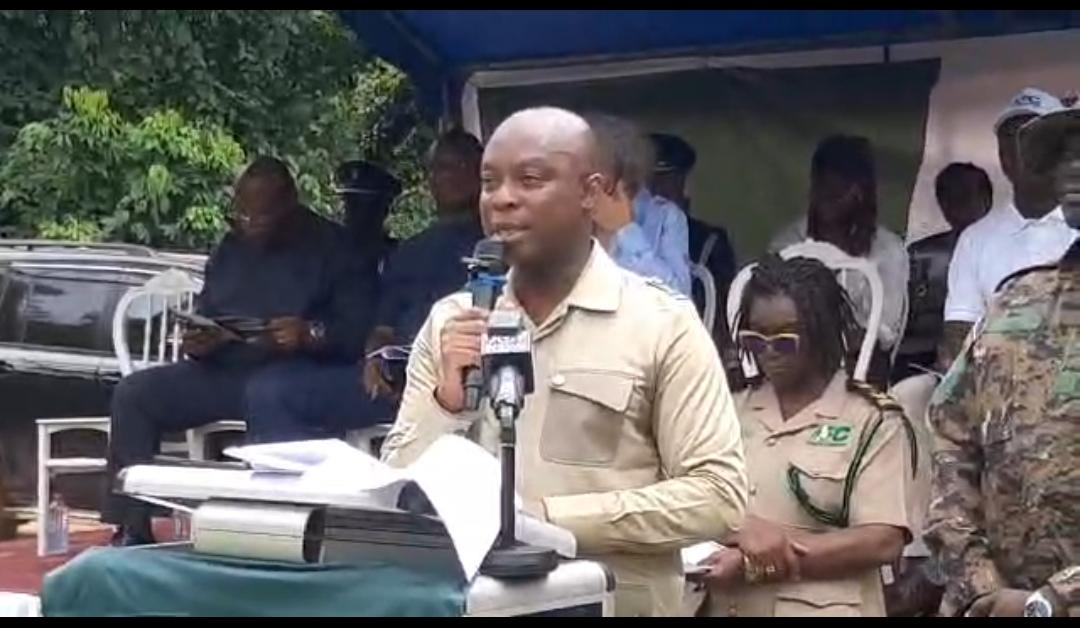
The United Kingdom and Ghana governments have officially handed over ten newly constructed forest protection camps and two operational checkpoint camps to the Ghana Forestry Commission.
This initiative aims to strengthen efforts against illegal mining (‘galamsey’) and illegal logging nationwide.
The infrastructure, commissioned Tuesday at Numereso in the Oda River Forest Reserve in the Ashanti Region, represents a significant shift under the UK-Ghana Forest Governance Partnership launched in December last year.
At the inauguration, Dr Hugh C.A. Brown, Executive of the Forestry Commission, stated that the new facilities mark a move away from traditional, isolated forest patrols toward coordinated, continuous on-site security operations.
He emphasised that this demonstrates the Ghana government’s serious commitment to combating illegal mining, logging, and other forest crimes.
Previously, forest guards operated alone from rented quarters in fringe communities, patrolling vast areas without assistance.
The new framework stations personnel within designated reserves, forming rapid-response teams capable of immediate deployment to environmental threats.
Baseline assessments indicate that illegal activities have severely degraded thousands of hectares in protected enclaves across the Ashanti, Western, Western North, Ahafo, and Bono Regions.
Authorities report that illegal actors have evolved from local tools to organised criminal networks using advanced communications, heavy machinery, and armed resistance.
The revised strategy places frontline officers near vulnerable perimeter zones, aiming to disrupt logistical routes and enhance local monitoring.
Additionally, two new tactical checkpoint camps in Bono East and Savannah regions will monitor interstate movement of timber to prevent unauthorised exports.
Dr Brown highlighted that stationed officers can respond swiftly to reports of illegal logging, galamsey, encroachment, or wildfires, minimising damage.
Siting the camps within reserves is also expected to improve operational efficiency.
Despite these infrastructural developments, Dr Brown noted persistent staffing shortages, with a deficit exceeding 2,500 Resource Guards as of early this year. He called for immediate recruitment, equipment upgrades, and welfare improvements for frontline personnel.
A multi-stakeholder Working Group has been established to develop long-term conservation strategies, involving the Ministry of Lands and Natural Resources, the Ghana Armed Forces, intelligence agencies, local governments, and traditional authorities.
The commissioning ceremony was attended by prominent officials, including Hon. Emmanuel Armah-Kofi Buah, Minister for Lands and Natural Resources; Hon. Dr Frank Amoakohene, Ashanti Regional Minister; and Dr Terri Sarch, Acting Deputy UK High Commissioner to Ghana.