
Member of Parliament (MP) for Nhyiaeso, Dr Stephen Amoah, has announced an aggressive suite of policies targeting underage gambling, alcoholism, unregistered motorbikes, and illicit drug camps within his constituency.
The MP declared a zero-tolerance approach to anti-social behaviours threatening the future of the local youth, warning that both violators and complicit business operators will face immediate arrest.
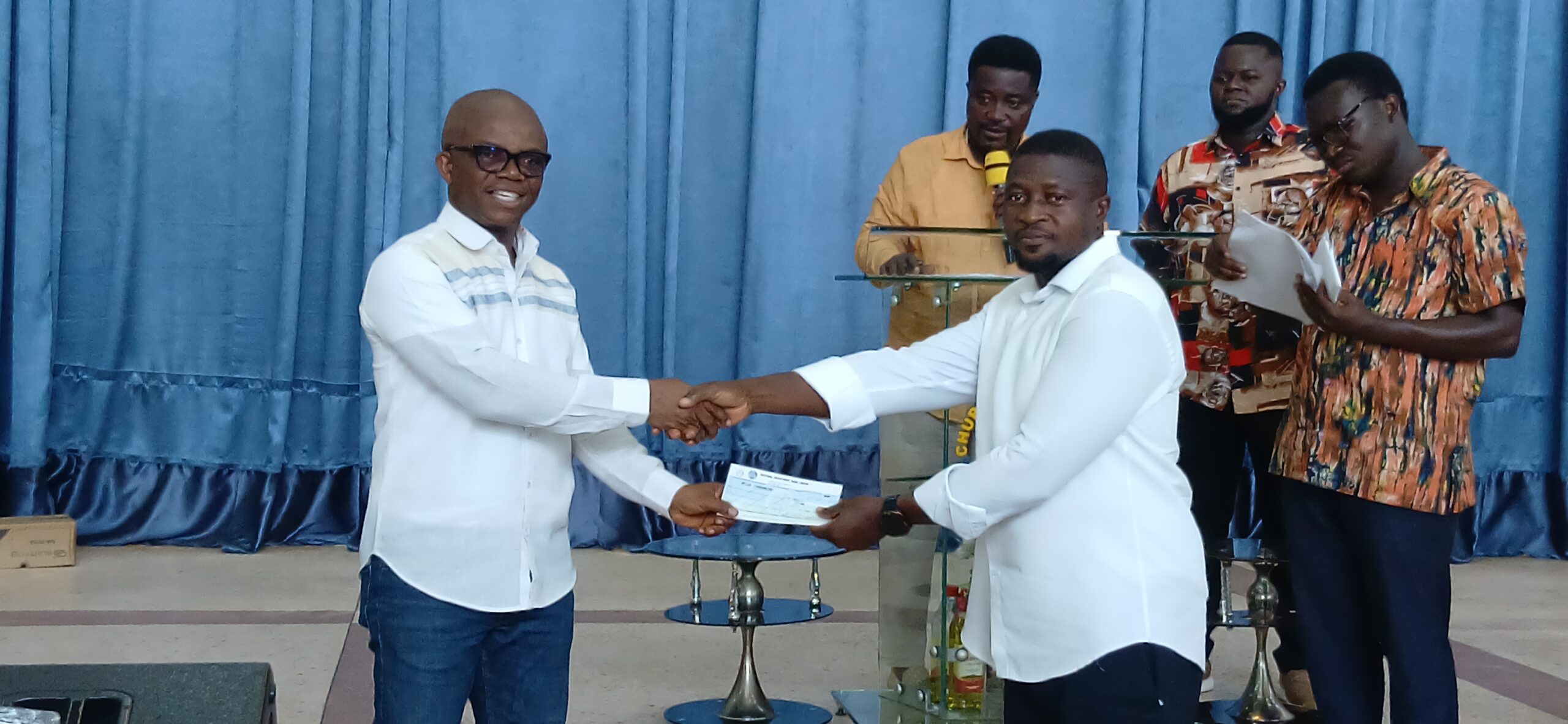
Dr Amoah unveiled these measures during an event on Monday, 22nd June 2026, where he also awarded scholarships to 300 students to pursue various degree programmes at the University level and donated 30 street lights to each of the nine electoral areas within the constituency.
He also presented five desktop computers each to State Experimental Junior High School and John Agyekum Kufuor Senior High School in the constituency.
Sweeping Local Policies and Arrest Warnings
Speaking passionately about the rising tide of youth vulnerabilities, the MP outlined strict new enforcement rules designed to clean up the Nhyiaeso constituency.
Under the new directives, which are being implemented in close coordination with local Chiefs and Assembly Members, anyone under the age of 18 caught engaging in sports betting—specifically citing platforms like Mybet—will be arrested.
Crucially, the operators of gambling establishments who permit minors on their premises will face identical punitive actions.
Furthermore, the MP banned minors from purchasing or consuming alcohol, stating that underage individuals caught drinking will be detained, and their parents held legally accountable—even if the minor was sent to purchase the alcohol by an older relative.
Addressing security and public safety, Dr Amoah announced a total ban on unregistered motorbikes entering the boundaries of Nhyiaeso.
He warned that unregistered motorbikes will be impounded, urging riders to park illegal motorbikes immediately.
Eradication of “Weed” Camps and Skill Reintegration
A central pillar of the MP’s address was the systematic dismantling of illegal drug zones, commonly referred to as “weed camps,” across the constituency.
While expressing deep concern and affection for those battling addiction, Dr Amoah insisted that their destructive habits could no longer become a burden to the progress of Nhyiaeso.
He stated firmly that weed camps will not be entertained in Nhyiaeso and noted that all such camps are slated for destruction.
However, offering a path to redemption, the lawmaker announced a simultaneous skill acquisition policy designed to rehabilitate former smokers.
The initiative will provide institutional support and training in practical trades—including carpentry, barbing, and hairdressing—to give vulnerable youth gainful employment and a sustainable alternative to drug abuse.
A Unified Call to Action for Key Stakeholders
To achieve lasting social transformation, Dr Amoah called for a unified front among the three primary stakeholders in child development, which include parents, educational authorities, and the government.
Concentrating heavily on parenting, the MP expressed profound worry over modern family trends, noting that many parents leave home too early and return too late, substituting physical presence with money.
Pointing out that some parents only have direct contact with their children on Sundays, he warned that unsupervised children are left at the mercy of bad actors who lure them into unacceptable behaviours.
He urged parents to maximise contact hours with their wards, using his own illiterate parents as an example of how a dedicated upbringing can elevate children to become MPs, nurses, businessmen, or Presidents.
Turning his attention to educators, Hon Amoah admonished teachers to treat students as their own children.
He expressed deep spiritual distress over recent reports of teachers engaging in anti-social behaviour, reminding them of their sacred responsibility to cultivate national assets rather than instilling bad habits that destroy the youth.
The MP emphasised that while the government is doing its best, national funding remains insufficient for the educational sector.
He urged the state to significantly step up investments to eliminate dilapidated school structures and the phenomenon of “schools under trees,” while calling for a holistic review of national laws to better protect the progress of the younger generation.
Have a news tip or a correction regarding this story? Reach out to our editorial desk at elishaadarkwah@gmail.com or contact us on 0245975627.