
The Ashanti Regional Minister, Dr Frank Amoakohene, has launched a major crackdown on unauthorised structural developments within waterways as part of a renewed enforcement campaign to mitigate severe flooding across the region.
The move follows an emergency stakeholder meeting held on Monday, triggered by recent heavy rains that submerged several communities and disrupted local livelihoods.
Dr Amoakohene reaffirmed the government’s unwavering commitment to enforcing spatial planning regulations, warning that illegal developers who compromise public safety will face the full rigour of the law.
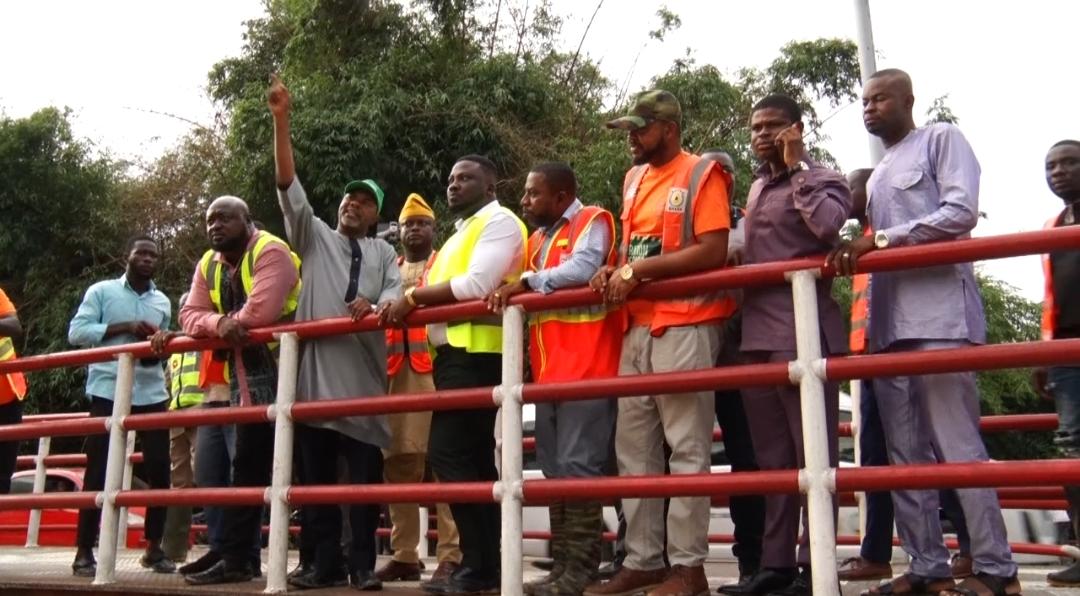
Following the emergency meeting, the Regional Minister led a high-powered joint task force on an inspection tour of key flood hotspots.
The delegation included officials from various Metropolitan, Municipal, and District Assemblies (MMDAs), the Spatial Planning Department, the National Disaster Management Organisation (NADMO), and leadership from the Kwame Nkrumah University of Science and Technology (KNUST).
The inspection revealed widespread encroachment on critical riverbanks and natural drainage channels, driven primarily by unauthorised buildings and indiscriminate land-filling.
Experts on the tour noted that these illegal activities have severely restricted water flow, drastically escalating flood risks in vulnerable urban zones.
Multi-Stakeholder Action and Direct Interventions
Speaking during the tour, Dr Amoakohene emphasised that safeguarding the region’s rivers and drainage infrastructure requires a collective effort.
He appealed to residents, property developers, local assemblies, and traditional authorities to protect natural waterways, noting that environmental preservation is directly tied to safeguarding public infrastructure and human lives.
As an immediate intervention, the regional administration has deployed heavy machinery to clear choked drainage systems.
Alhaji Mohammed Nasir Ibrahim, the Ashanti Regional Director of NADMO, disclosed that his outfit secured direct authorisation and an excavator from the Regional Minister to begin immediate desilting works.
According to Alhaji Ibrahim, the Minister has been leading the exercise from the front lines—personally navigating debris-filled drains, supervising the dredging, and issuing stern warnings to residents against dumping solid waste into drainage systems.
Addressing the KNUST Hotspots
The enforcement exercise also extended heavily into institutional lands that double as high-risk flood zones.
Professor David Asamoah, the Pro-Vice-Chancellor of KNUST, joined the Regional Minister in the field to help tackle encroachment and structural blockages around the Wewe River, a major hotspot flowing through the university campus that frequently bursts its banks during heavy downpours.
Local authorities have indicated that the demolition of unauthorised structures flagged during the tour will commence systematically to restore the natural paths of the region’s primary water bodies.