
The Minister for Communication, Digital Technology, and Innovations, Hon. Samuel Nartey George, has directed an immediate comprehensive audit of all 2,016 rural telephony sites across the country.
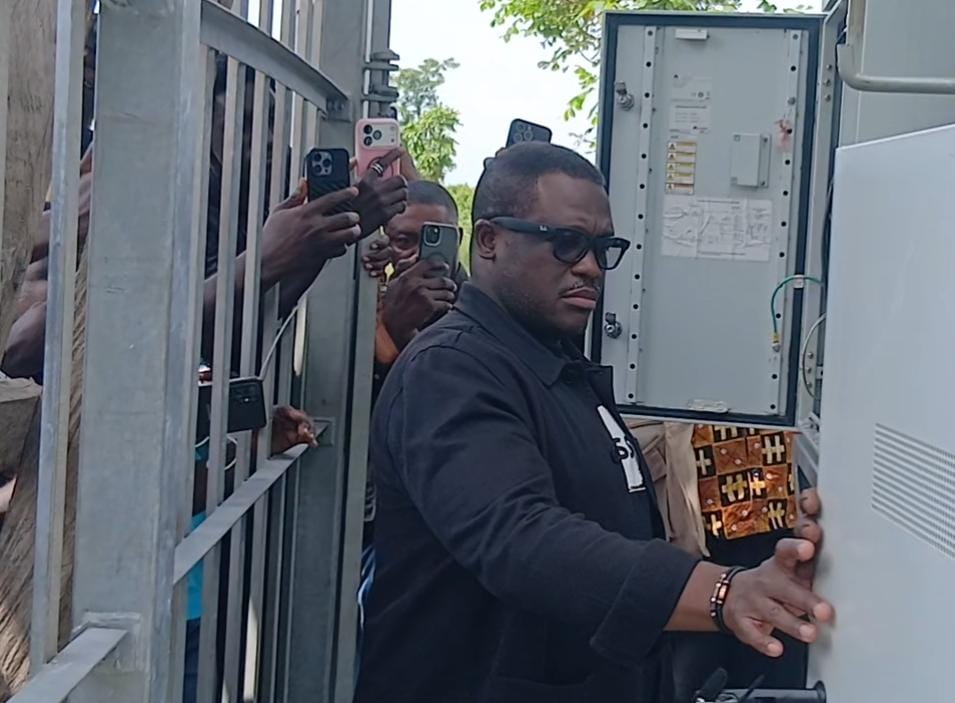
Addressing the media today during a field inspection of ongoing rural telephony projects in the Sekyere Afram Plains District of the Ashanti Region, the Minister announced that the Ghana Investment Fund for Electronic Communications (GIFEC) has been instructed to verify the physical construction, active status, and traffic capacity of every site inherited under the national project.
”At the board level, we’ve authorised the administrator to carry out an audit so that—I’m unable to visit all the 2,016 sites myself—we’re commissioning an audit to ascertain the status of all of the sites: whether the sites are up and constructed, and when they are constructed, whether they are active and passing traffic,” Mr George stated.
During the tour, the Minister confirmed immediate network activations across several remote communities in the district.
The telecommunications mast on-site at Dawia, he said, is expected to go live to route local network traffic via its donor site at Birim by the close of today.
Solar-powered sites at Abenua, Nyameama No. 1, and Nyameama No. 2 are scheduled to achieve full connectivity by the end of the week, the Minister stated.
In Anyinofi, Mr George highlighted that, telecom subcontractor Rainbow has commenced construction on a new physical telecommunications mast in partnership with MTN Ghana.
Following consultations with the District Chief Executive (DCE) and the Member of Parliament, he said, three extra communities with existing equipment were identified for immediate installation.
”Our desire to connect our communities is real. Across almost all these rural communities, there is no electricity, but we are bringing connectivity ahead of time. Today, access to the digital footprint is as critical as roads, water, and electricity,” Mr George stressed.
Addressing the primary operational bottlenecks facing rural connectivity, the Minister highlighted battery theft as the single greatest threat to solar-powered telecom infrastructure.
He issued a community protection request to traditional authorities and local youth groups to safeguard solar storage battery banks, while grid-connected outage issues involving prepaid electricity metres are being addressed directly with district authorities.
To prevent the expansion of the digital divide as major cities transition to 5G, he said, the ministry is spearheading a strategic upgrade of rural GIFEC networks from 3G to 4G standards, ensuring that rural residents gain access to reliable high-speed data.
He also confirmed that MTN Ghana has been contracted to build 800 new physical telecommunications sites across underserved constituencies.
This targeted site allocation, he said, followed an intensive 13-hour consultation session at the Ministry, where parliamentary caucuses and technical teams mapped out high-priority connectivity gaps constituency by constituency.
Mr George highlighted thatfunding for the smaller community networks continues through GIFEC contributions from licensed telecommunication operators, bridging the gap where commercial telecom masts are economically unviable due to low population density and high operational expenses.
He assured residents that the Mahama administration, supported by Finance Minister Dr Cassiel Ato Forson, remains committed to guaranteeing the financial resources necessary to bridge the digital gap between rural and urban Ghana.
Have a news tip or a correction regarding this story? Reach out to our editorial desk at newshubgh2026@gmail.com or contact us on 0245975627.