

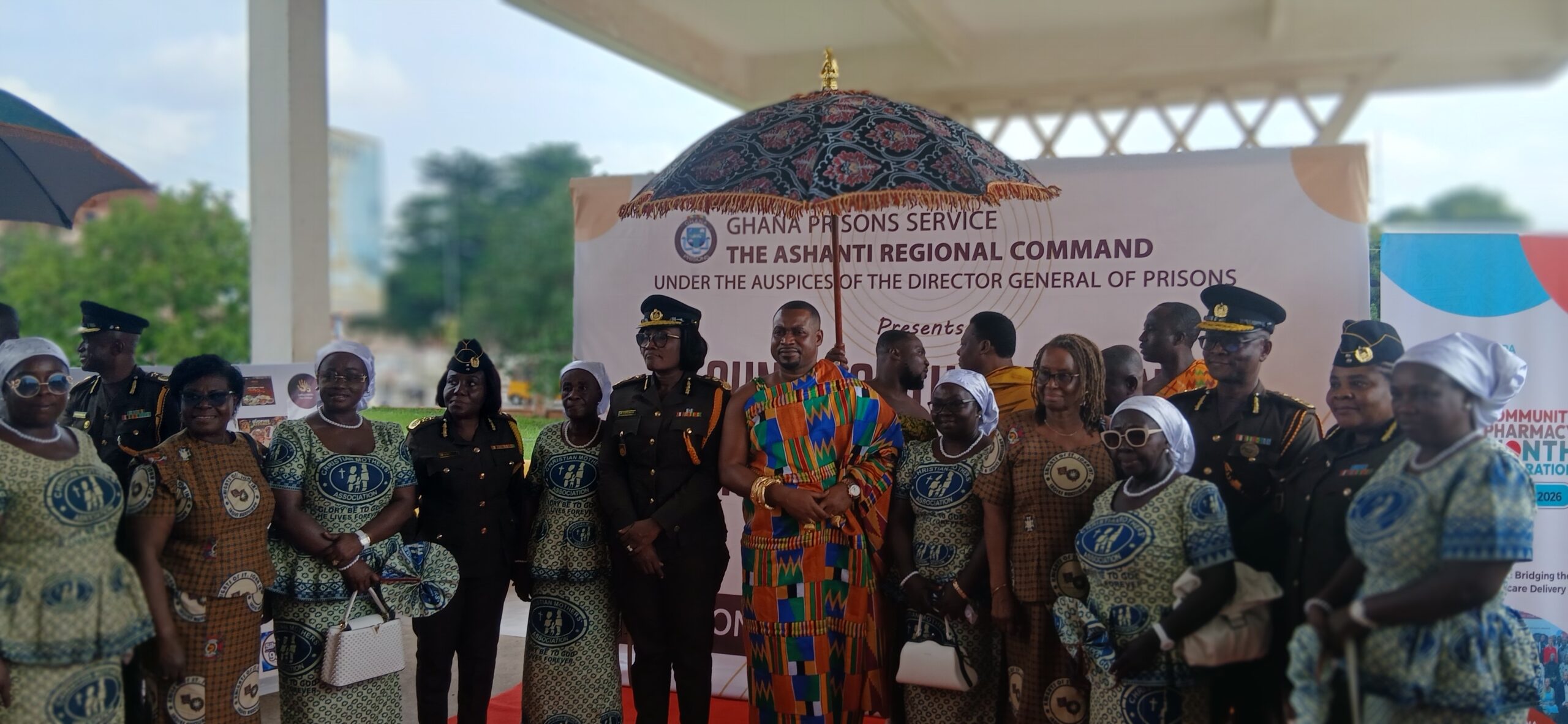
The Director-General of Prisons, Mrs Patience Baffoe-Bonnie, has launched the Ashanti region’s Ghana Prisons Service Medicine and Equipment Bank initiative in Kumasi, marking a significant step toward transforming healthcare delivery across correctional facilities.
The initiative forms a core part of the broader “Think Prisons 360 Degrees” agenda, which focuses heavily on the welfare and dignity of both inmates and correctional officers.
It aims to provide a practical, sustainable solution to medical shortages by pooling donated medicines and equipment into a centrally managed supply system.
Under this structure, stock will be distributed based on the need to deprived prison clinics across the country, with facilities in the Ashanti region being prioritised immediately.
Speaking at the launch on 25th June 2026, Mrs Baffoe-Bonnie emphasised that safeguarding inmate health is a critical public health investment rather than a simple humanitarian gesture.
She explained that because incarcerated individuals eventually return to their communities, improving healthcare within prison walls directly protects public safety, boosts rehabilitation success, and supports national development.
To maintain donor confidence and secure long-term partnerships, the Ghana Prisons Service has established strict guidelines for transparency and accountability.
The Director-General assured partners that all contributions would be meticulously documented, properly utilised, and strictly monitored through clear accounting practices.
She appealed to corporate bodies, non-governmental organisations, and the public to support the new bank through donations of medical consumables, equipment, technical expertise, or financial assistance.
For his part, the Ashanti Regional Commander of Prisons, DDP James B. Mwinyelle, also appealed to corporate organisations, private individuals, development partners, and faith-based organisations to contribute to the bank.
He explained that support does not have to be strictly financial, noting that contributions of medical equipment, pharmaceutical supplies, and professional medical expertise are desperately needed to ensure the long-term sustainability of prison healthcare reform.
Nana Boateng Bediako Debrah, the Kwamamanhene, deputising for the Asantehene, Otumfuo Osei Tutu II, rallied stakeholders to support the creation of a continuous, sustainable medical supply chain for correctional facilities rather than relying on one-time interventions.
Nana Debrah emphasised that while incarceration strips individuals of their freedom, it does not strip them of their humanity or their fundamental right to basic healthcare.
Noting that access to adequate medicines and medical equipment remains a major challenge across many correctional facilities, he stated that improving prison healthcare not only helps us inmates but also strengthens public health and contributes to a more humane and just society.
Representing the Ashanti Regional Minister, the Kumasi Mayor, Hon Richard Ofori Agyemang Boadi, urged stakeholders and government institutions to consistently partner with the Ghana Prisons Service.
He emphasised that continuous collaboration is vital to ensuring the success and accessibility of the prisons’ Medicine and Equipment Bank initiative.
Have a news tip or a correction regarding this story? Reach out to our editorial desk at elishaadarkwah@gmail.com or contact us on 0245975627.