
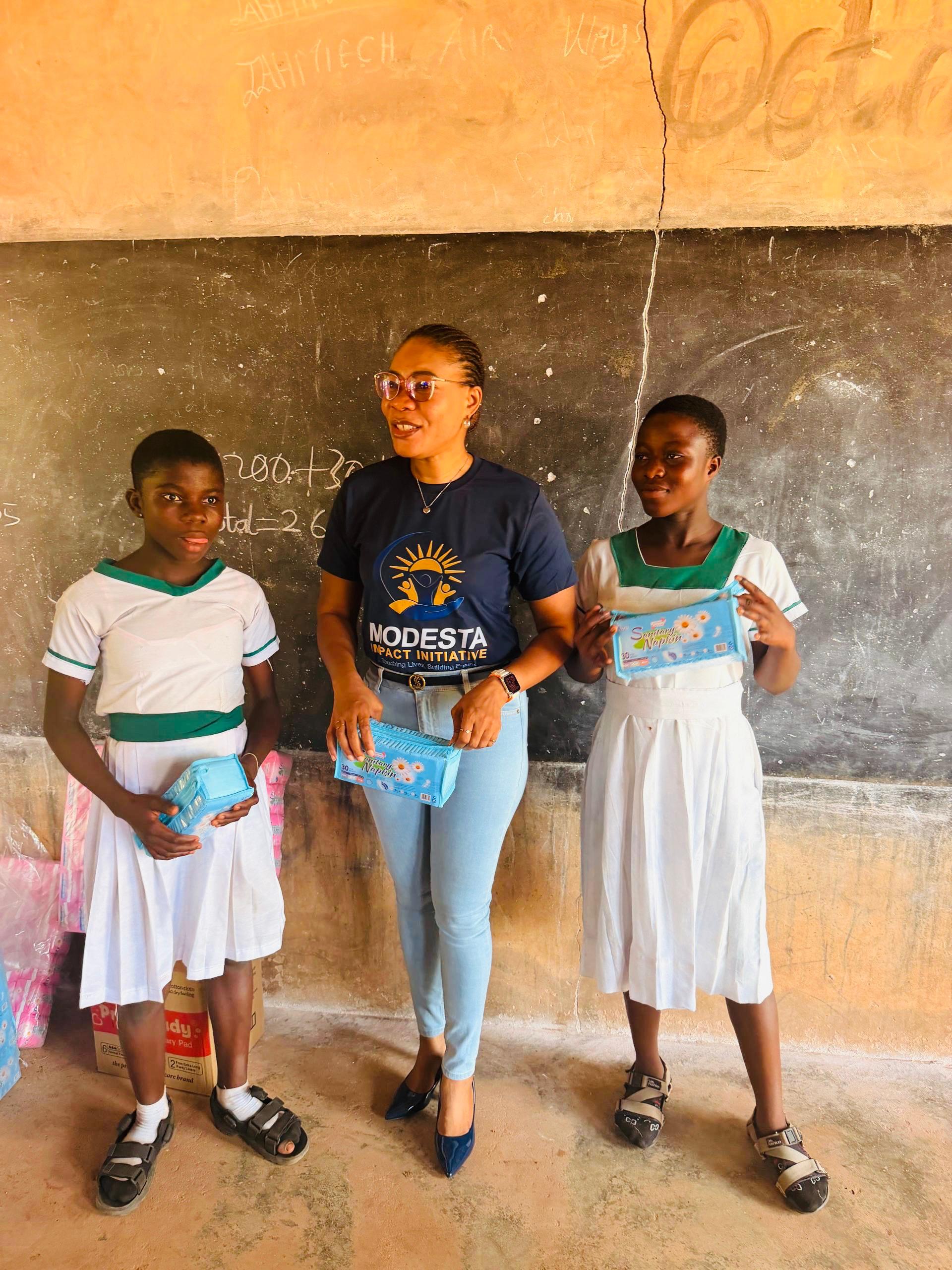
To mark this year’s Menstrual Hygiene Day, local non-governmental organisation Modesta Impact Initiative visited Atobiase R/C Primary School in the Bosomtwe District, providing critical reproductive health education and donating over 5,000 sanitary pads valued at more than GH¢10,000.
The outreach, held in line with the global commemoration on 28th May 2026, aimed to combat period poverty, reduce school absenteeism among young girls, and ensure that menstrual challenges do not disrupt their education.
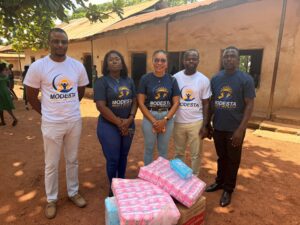
During the session, facilitators provided the female students with practical guidance on menstrual hygiene management, personal care during adolescence, and essential reproductive health knowledge.
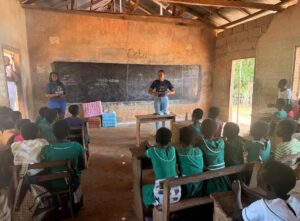
The session specifically targeted breaking down deeply rooted societal myths and misconceptions, empowering the young girls to manage their health safely and with dignity.
Supporting Women in Rehabilitation
The school outreach follows a separate initiative from earlier this month, where the organisation visited the Kumasi Female Prison to commemorate Mother’s Day.
During the visit, the team provided motivational engagement and words of encouragement aimed at promoting the mental well-being and rehabilitation of the inmates.
To support vocational training and preparation for social reintegration, the initiative donated materials to refurbish the prison’s salon facility.
Officials at the Kumasi Female Prisons commended the organisation, noting that the intervention will directly improve living conditions and enhance vocational opportunities for the inmates.
Driving Systemic Social Change
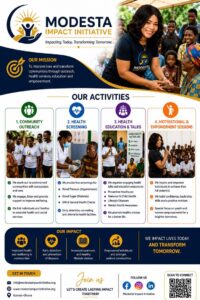
Operating under the slogan “Impacting Today, Transforming Tomorrow,” the Modesta Impact Initiative focuses on community outreach, health services, education, and women’s empowerment across Ghana.
Speaking about the vision behind these projects, Dr Modesta Abbem, the founder and leader of the initiative, emphasised that the organisation’s primary focus is addressing pressing humanitarian, environmental, and social challenges.
“We are committed to impacting lives today and transforming communities for tomorrow,” Dr Abbem said. “Unlike profit-driven institutions, our goal is to drive systemic change by supporting vulnerable populations—especially women and young girls—through interventions that promote dignity, wellbeing, self-reliance, and social inclusion.”
Dr Abbem added that the organisation plans to expand its programmes to more communities across the country to foster long-term national development.