
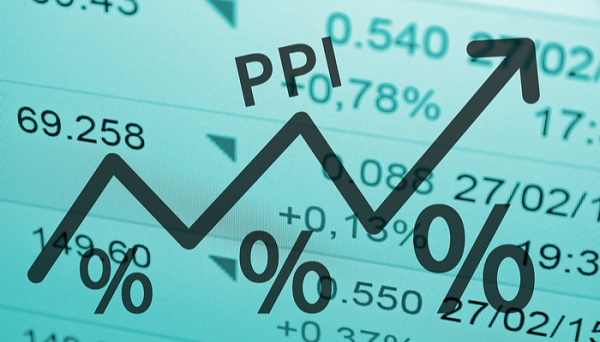
Ghana’s factory-gate inflation rose to 2.7% in April 2026, driven primarily by a sharp increase in prices within the country’s critical mining and quarrying sector.
According to the latest Producer Price Index (PPI) data released by the Ghana Statistical Service (GSS), the new annualised rate represents a 1.1 percentage point increase from the 1.6% recorded in March 2026, signalling renewed upward pressure on production costs.
Despite the year-on-year climb, short-term cost pressures showed signs of moderation. On a month-on-month basis, producer prices rose by 0.4% in April, a deceleration from the 0.7% monthly increase recorded in March.
The upward trajectory in producer inflation was heavily influenced by the mining and quarrying sector.
As the largest component of the PPI basket with a 43.7% weight, the sector’s inflation rate jumped sharply to 5.6% in April, up from 3.9% the previous month.
Utility costs also remained stubbornly high, continuing to squeeze industrial margins as electricity and gas inflation stood at 11.0%, while water supply and waste management recorded a 10.3% rate.
Conversely, the manufacturing and transport sectors showed signs of recovery by narrowing their deflationary gaps.
Manufacturing inflation improved to negative 0.6% in April from negative 2.2% in March, reflecting a significant easing of price declines across factories.
Similarly, transport and storage deflation moderated to minus 7.1% compared to minus 9.8% in March.
The mixed data highlights a complex economic picture for Ghanaian industries, where surging resource and utility costs are partially offset by stabilising prices in manufacturing and logistics.