

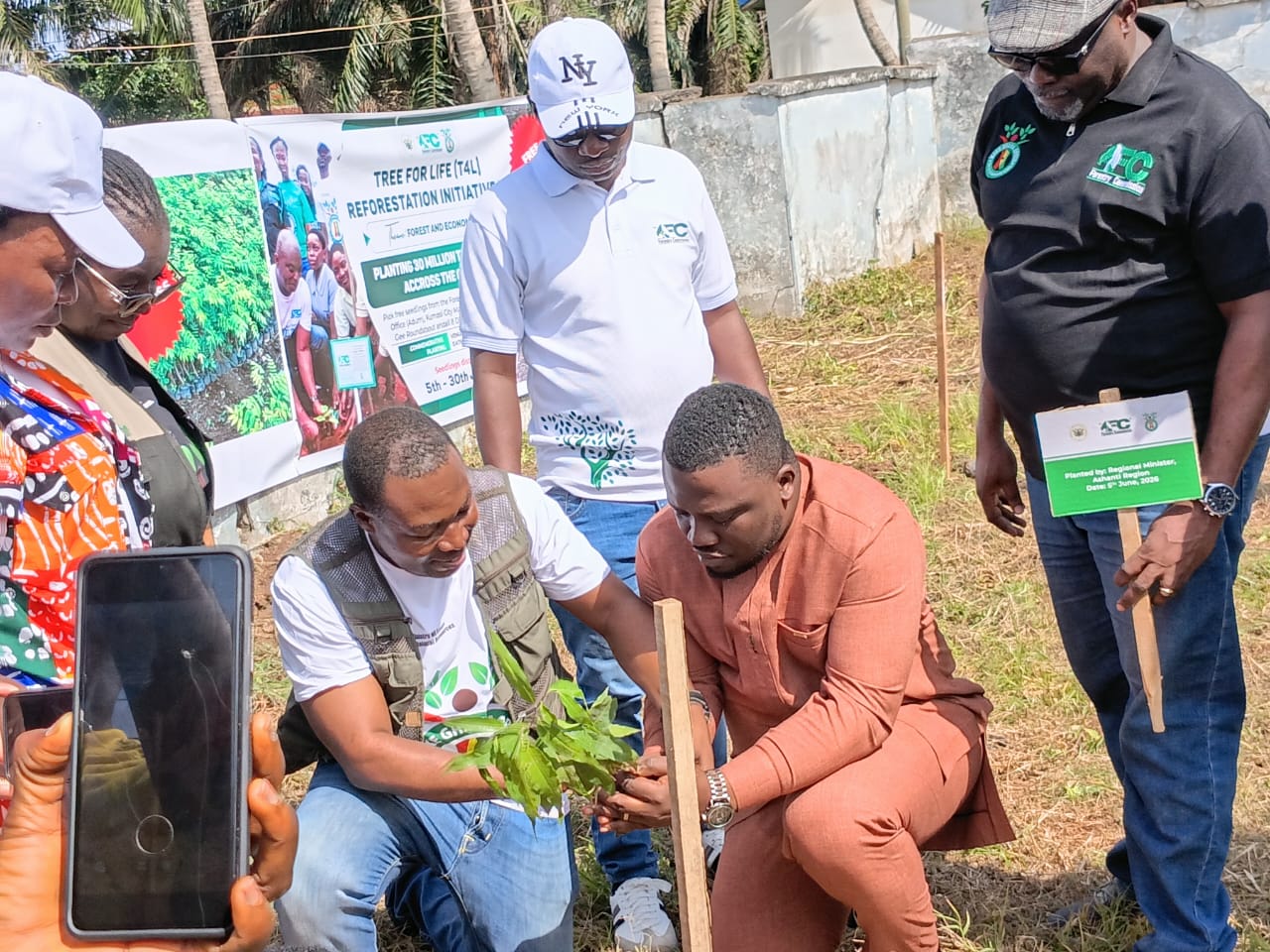
The Ashanti Regional Forestry Commission has officially launched its 2026 tree-planting exercise with an ambitious target to plant three million trees across the region this year.
The initiative builds on the momentum of a highly successful 2025 campaign, which recorded an impressive tree survival rate of over 85 percent.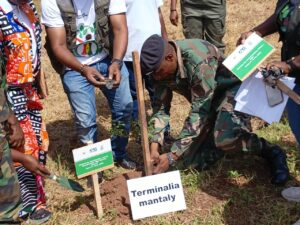
The announcement was made by the Regional Manager, Isaac Noble Eshun, during a commemorative tree-planting event at the Armed Forces Senior High School in Kumasi.
The ceremony marked the official launch of the month-long ‘Tree for Life’ (T4L) Reforestation Initiative 2026, which coincided with the global celebration of World Environment Day.
Focus on Forest Reserves and Monitoring
According to Mr Eshun, the 2026 strategy will heavily prioritise long-term sustainability and environmental recovery over mere distribution numbers.
”Most of the planting this year will be directed toward reclaiming degraded forest reserves,” Mr Eshun stated.
He emphasised that the commission has implemented intensive monitoring mechanisms to actively track the survival and growth rates of the newly planted trees.
To maximise resource efficiency and prevent waste, the commission has introduced strict distribution caps for the general public.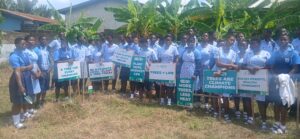
Individuals requesting seedlings will be rationed to a maximum of five trees each.
”This is a deliberate strategy to curb waste,” Mr Eshun explained, noting that evaluations of past exercises revealed some citizens collected seedlings but ultimately failed to plant them.
Free seedlings remain available for pickup at all Forestry Commission offices across the Ashanti Region for the duration of the month-long programme.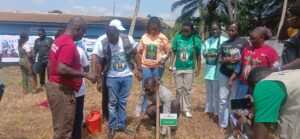
Reclaiming the “Garden City” Status
Supporting the initiative, the Ashanti Regional Minister, Dr Frank Amoakohene, urged residents to embrace domestic tree-planting to help Kumasi reclaim its historic identity as the “Garden City” of West Africa.
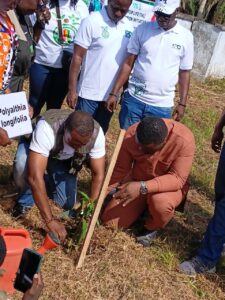
Dr Amoakohene highlighted upcoming policy shifts, noting that discussions will soon be held with Metropolitan, Municipal, and District Chief Executives (MMDCEs) to enforce home-tree-planting initiatives designed to beautify Kumasi and the broader region.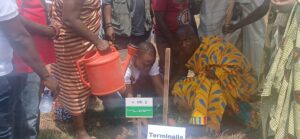
Call to Protect Reserves and Address Galamsey
Adding traditional weight to the environmental call to action, Suntresohene Kyeame Ohene-Asante, who spoke on behalf of Bantamahene, Baffour Asare Owusu Amankwatia IV, strongly advocated for the preservation of natural ecosystems.
He urged local authorities to desist from rezoning and leasing out nature reserves for commercial construction.
”Even if lands are rezoned, specific portions must be demarcated and reserved for the Forestry Commission to plant trees, protecting both the local environment and vital water bodies,” Ohene-Asante stated.
Addressing the destructive impact of illegal mining, the traditional leader proposed a structural economic solution, requiring the government to collect a mandatory reclamation fee before issuing mining licenses.
This financial bond, he argued, would ensure that the state has the necessary funds to restore degraded lands and protect severely threatened water bodies if miners refuse to reclaim the sites themselves.