
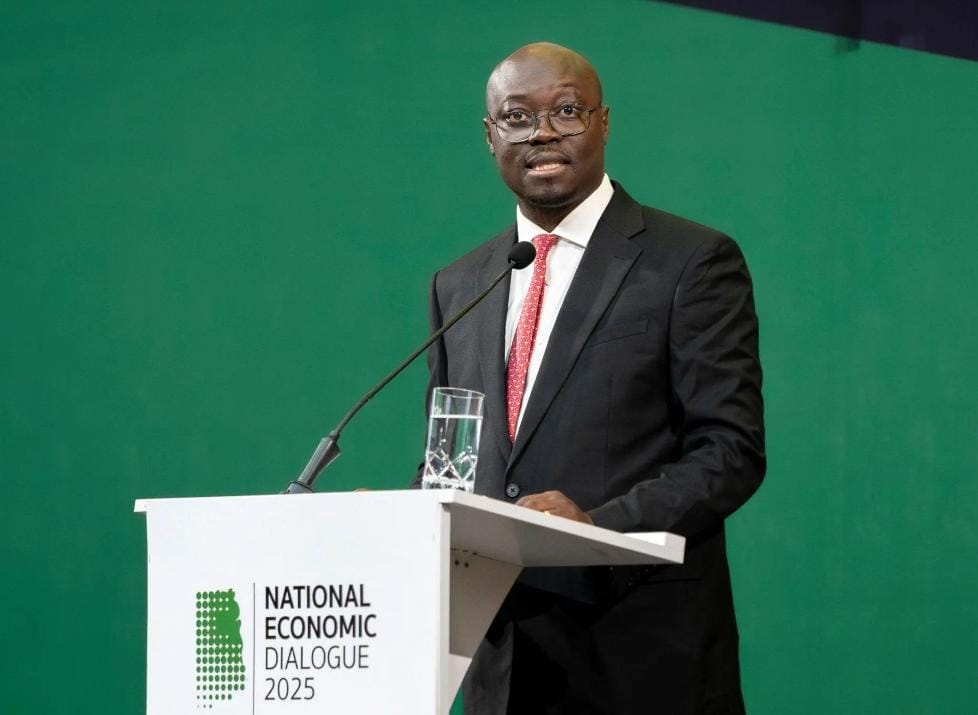
Finance Minister Dr Cassiel Ato Forson on Thursday, 23 July used the 2026 Mid-Year Budget Review to send a clear message to Parliament and the markets. That message was Ghana’s economic recovery remains firmly on course.
Six months into the fiscal year, the economy has outperformed most of the macroeconomic assumptions underpinning the 2026 Budget.
Inflation has eased sharply to 5.3%, well below the government’s target band of 8% (±2%), while real GDP growth accelerated to 6.0%, exceeding the budget target of 4.8%.
Non-oil GDP growth reached 6.3%, comfortably above the 4.9% projection, and gross international reserves strengthened to five months of import cover, far exceeding the minimum target of three months.
Nevertheless, the Finance Minister chose not to revise the government’s macroeconomic indicators or seek a supplementary budget.
But beyond the headline indicators, the budget contains a series of numbers that provide a clearer picture of government’s priorities, the state of the economy and the direction of fiscal policy.
Here are 12 economic figures that matter.
1. GH¢144bn spent
Despite perceptions that government has been aggressively tightening expenditure, the mid-year review shows that GH¢143.7 billion had been spent by the end of June.
This represents 47.5% of the programmed GH¢302.5 billion expenditure for 2026. The figure excludes an additional US$700 million paid in Eurobond debt service.
The largest spending items were GH¢48.8 billion for public sector compensation including SSNIT and Tier 2 contributions and GH¢21.5 billion in domestic interest payments.
This indicates the continued weight of wages and debt servicing on public finances.
2. Revenue holds 7.8%
Revenue mobilisation remained largely on target during the first half of the year despite slower global economic conditions. Total revenue and grants reached 7.8% of GDP, just below the 7.9% target.
Domestic revenue stood at 7.7% of GDP against a target of 7.8%, while non-oil tax revenue reached 6.4% of GDP, narrowly missing the 6.5% target.
The performance suggests that government has broadly maintained fiscal discipline while keeping revenue collection close to budget expectations.
3. US$100bn economy
Ghana’s economy crossed the US$100 billion mark in 2025 for the first time in its history. It makes the country one of Africa’s largest economies.
This suggests stronger economic growth, exchange rate stability and expanding nominal output, making Ghana more appealing to investors.
4. ¢15.6 debt buffer
Government has built a GH¢15.6 billion Sinking Fund to prepare for an estimated GH¢111 billion debt repayment peak in the next two years. Specifically GH₵58 billion and GH₵53 billion in 2027 and 2028 respectively.
The fund is expected to reach GH¢30 billion by the end of this year to meet the first major Domestic Debt Exchange Programme (DDEP) maturities due in February 2027.
5. ¢2.7bn market confidence
Ghana returned to the domestic bond market with a successful GH¢2.7 billion seven-year cedi bond in April 2026.
It is the first long-term domestic issuance since the 2022 debt crisis and signals renewed confidence in the country’s fiscal outlook.
6. Debt declines 45%
Ghana’s debt-to-GDP ratio has fallen to 45% as of June 2026, down sharply from 61.8% at the end of 2024.
Achieving the statutory debt target years ahead of schedule marks one of the strongest fiscal improvements highlighted in the review.
7. Income up US$850
Per capita income jumped from US$2,527 in 2024 to US$3,385 in 2025 which is an increase of more than US$850 in a single year and the highest level ever recorded.
The improvement shows stronger nominal economic growth and currency stability.
8. External strength of 8.3%
The current account surplus expanded from 1.9% of GDP in 2024 to 8.3% in 2025, driven largely by gold exports through GoldBod, which generated approximately US$15 billion in foreign exchange earnings.
The stronger external position has helped bolster reserves and stabilise the cedi.
9. $300m AI revenue
Technology is beginning to boost revenue mobilisation. According to the Finance Minister, the Publican AI system at the port increased customs-assessed values by more than US$300 million, representing a 17.5% increase of declared values by importers.
This demonstrates the potential of artificial intelligence to improve tax compliance.
10. ¢2.3bn digital VAT
Government is preparing to expand taxation of the digital economy.
A pilot system for collecting VAT from non-resident digital service providers was launched in April 2026 and is projected to generate approximately GH¢2.3 billion annually once fully operational.
11. 60% VAT leakage
Ghana loses an estimated 60% of potential VAT revenue through non-compliance – a development that highlights persistent weaknesses in tax collection and the need for stronger compliance measures.
12. 950K out of poverty
The budget review reports that about 950,000 Ghanaians exited multidimensional poverty between 2024 and 2025.
The multidimensional poverty rate declined from 24.9% to 21.9%, reflecting improvements across education, health, employment and living standards.
Have a news tip or a correction regarding this story? Reach out to our editorial desk at newshubgh2026@gmail.com or contact us on 0245975627.