
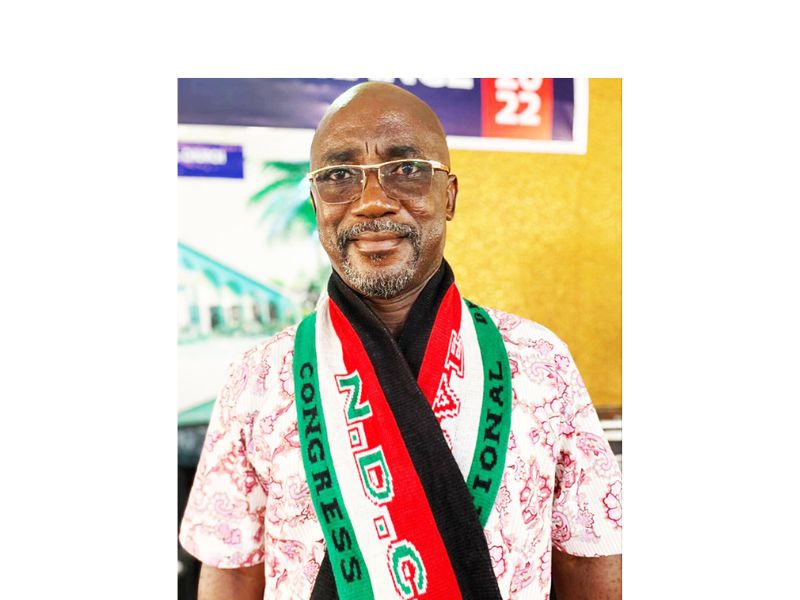
Hon Yaw Owusu Obimpeh, a Council of State Member representing the Ashanti region, has strongly criticised recent attempts by New Patriotic Party (NPP) Members of Parliament to blame the current administration of President John Dramani Mahama for unfinished infrastructure projects in the region.
In a strongly worded press statement titled “Ashanti Development is Not a Talk Show: Delivery, Not Distortion, Will Define the Record,” Obimpeh rejected what he termed a selective distortion of history, urging for leadership grounded in verifiable outcomes rather than political convenience.
The Delayed Healthcare Projects
The controversy centres heavily on two major health infrastructure projects: the Afari Military Hospital and the Sewua Regional Hospital.
According to Obimpeh, both facilities were initiated under President Mahama to decongest the Komfo Anokye Teaching Hospital (KATH) and expand healthcare access across Ghana’s middle belt.
Obimpeh emphasised that by January 2017, these projects had already reached advanced stages.
He argued that because the NPP subsequently held national power for eight years—controlling both the presidency and dominating parliamentary representation in the Ashanti region—the failure to complete these projects rests squarely on them.
“Yet these projects remained unfinished for a prolonged period. This makes current attempts at blame-shifting difficult to reconcile with the record of time and authority,” Obimpeh stated. “This is not accountability; it is political convenience reframed.”
He also clarified that the Afari Military Hospital is strictly under the jurisdiction and access procedures of the Ghana Armed Forces, a reality underscored during recent parliamentary oversight interactions.
Legacy of NDC Interventions
Defending the track record of the National Democratic Congress (NDC), the former Ashanti Regional Chairman of the party noted that development in the region does not belong to a single political tradition.
He emphasised that under President John Dramani Mahama, the region benefited from key interventions including Phase I of the Kejetia Market Redevelopment, the Kumasi Airport expansion toward international standards, and Community Day Senior High Schools (E-Blocks) across various districts.
Additionally, the administration advanced hospital projects in Tepa, Konongo, and Fomena, while implementing extensive urban and feeder road improvements, expanding water systems to multiple communities, providing rural electrification to underserved areas, and making substantial investments in educational infrastructure.
Renewed Development Agenda
According to the statement, a delivery-driven governance approach is re-emerging in the region with renewed focus under the current leadership of President Mahama and Ashanti Regional Minister Dr Frank Amoakohene.
Obimpeh outlined the administration’s current development priorities, which include taking immediate operational steps for both the Afari and Sewua hospitals, initiating the Aputuogya 24-Hour Market, and advancing the Krofrom Market redevelopment.
The plan also targets urban road and drainage works in Kaase, Ahodwo, and surrounding areas, the rehabilitation of critical bridges in Mpasaso, Kotokuom, and Jacobu, and various youth and community initiatives focused on civic and environmental improvement.
Obimpeh asserted that the citizens of the Ashanti region are discerning and well able to distinguish between initiating and completing, as well as between governance and commentary.
Maintaining that development is defined by functional hospitals, working markets, and connected roads rather than mere statements, he expressed confidence in Mahama’s commitment to accelerating regional growth.
“History ultimately remembers those who built, not those who debated what others built,” he said, calling for leadership that values performance over propaganda.